Robotic welding can deliver impressive consistency, but a robot cannot compensate for every variation in component positioning. If parts enter the welding cell at slightly different angles or locations during each cycle, even a precisely programmed robot may produce inconsistent results. This makes Robotic welding fixture parts an important element of automated welding accuracy.
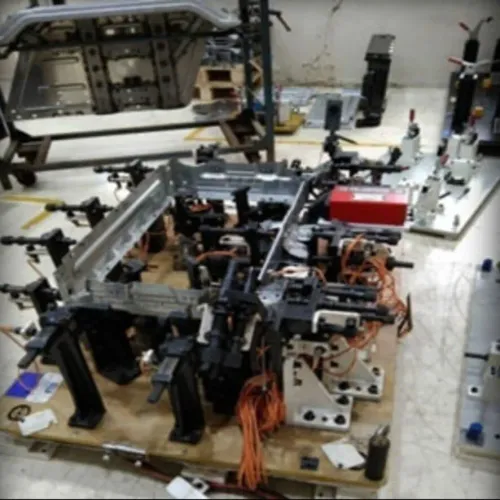
Fixture components establish the physical references that locate, support, and clamp the workpiece before welding begins. Their dimensional accuracy, rigidity, wear resistance, and interaction with the component can directly influence production repeatability.
Positioning accuracy starts before the robot moves
A welding robot follows programmed coordinates. It expects the workpiece to be positioned within an acceptable range relative to those coordinates.
If a locator is worn, a clamp is incorrectly positioned, or a fixture component has excessive clearance, the workpiece can shift away from its intended reference. The resulting problem may appear to be related to robot programming when the actual cause lies in workholding.
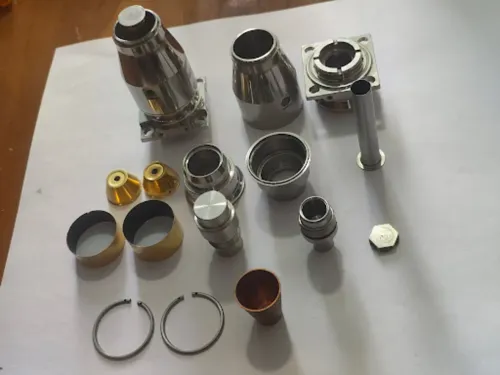
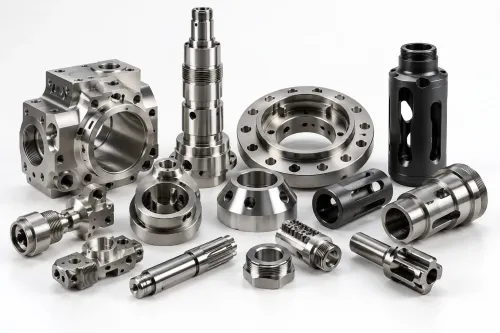
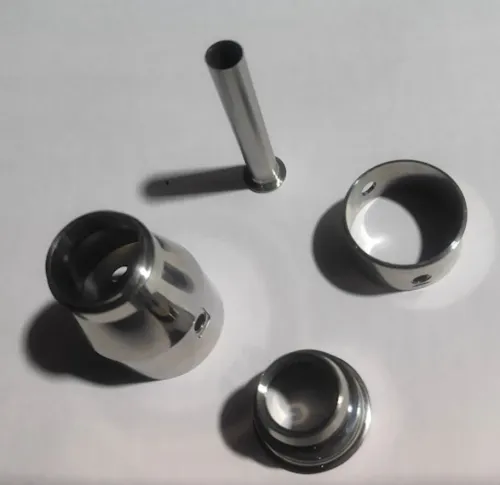
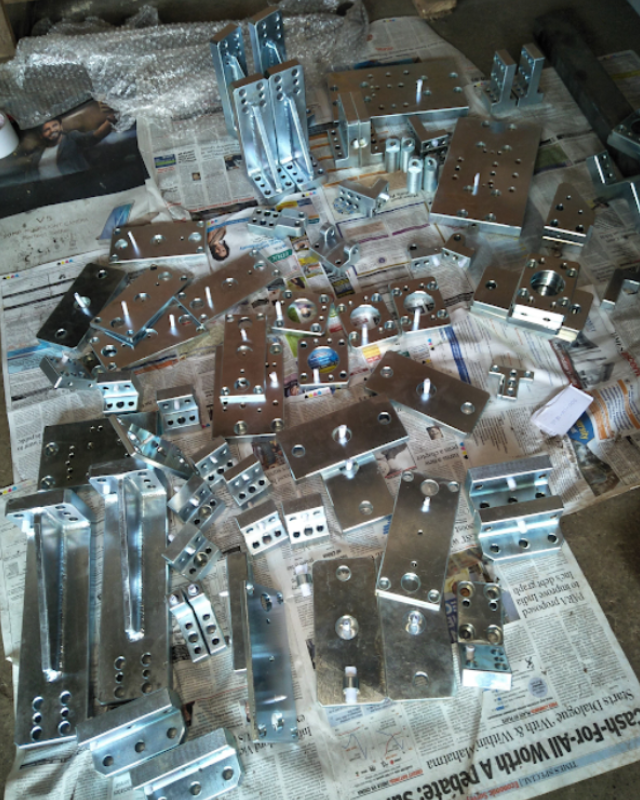
Critical fixture elements can include locating pins, rest pads, clamps, risers, brackets, blocks, shims, mounting elements, and application-specific machined components.
Heat creates another engineering challenge
Welding introduces heat into both the workpiece and its surrounding environment. Components expand during heating and contract as they cool. Fixture design therefore needs to hold the assembly accurately without unnecessarily restricting thermal movement.
Good engineering considers several factors together:
- Weld sequence
- Component material
- Heat input
- Clamp location
- Datum selection
- Distortion tendency
- Accessibility for the welding torch
- Loading and unloading requirements
Fixture components should also withstand repeated industrial cycles without losing the accuracy required by the process.
Wear can gradually change welding performance
Fixture degradation is not always sudden. A locating surface can wear slowly across thousands of cycles. The production line may continue operating while dimensional variation gradually increases.
Preventive inspection of locating pins, contact pads, clamps, bushes, and other critical Robotic welding fixture parts can help production teams identify changes before they become recurring quality problems.
Maintenance planning becomes particularly important in high-volume automotive production, where a small fixture issue can affect a large number of assemblies.
Pune's manufacturing base includes automotive OEMs, Tier 1 and Tier 2 suppliers, fabrication businesses, and automation integrators. For these manufacturers, fixture reliability needs to be considered alongside robot capability, weld parameters, component tolerances, and production targets.
Fixture accuracy supports process stability
When recurring robotic welding defects appear, teams often review robot paths and welding parameters first. Those checks are important, but the fixture should also be examined.
Useful questions include whether the component is seated against every intended locator, whether clamps apply consistent force, whether critical parts show wear, and whether accumulated dimensional variation is changing the final assembly position.
The goal is to create a predictable physical environment for every welding cycle. Accurate fixture components help the robotic system begin each operation from a repeatable reference.
By treating workholding as part of the welding process rather than a separate accessory, manufacturers can develop more stable automated cells and make better decisions about fixture design, maintenance, and replacement.
Keywords