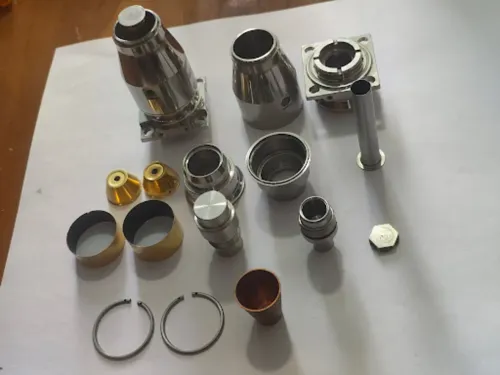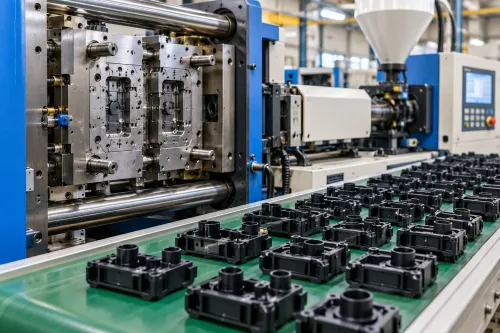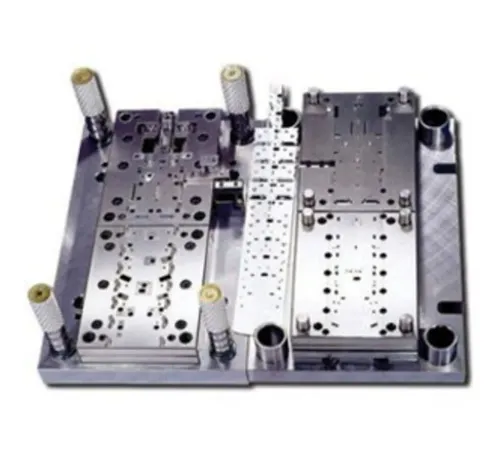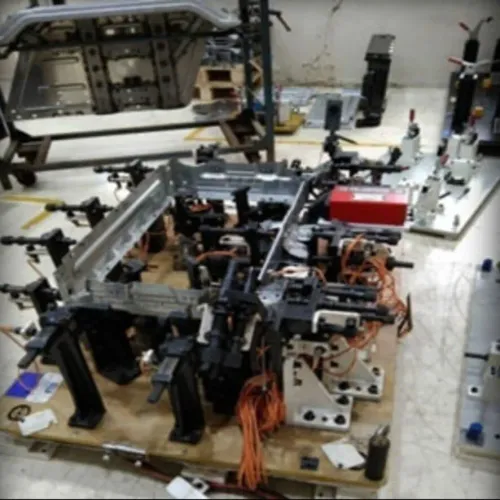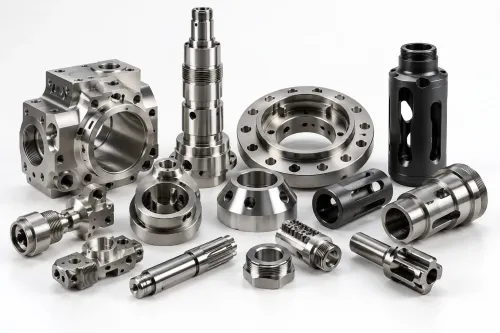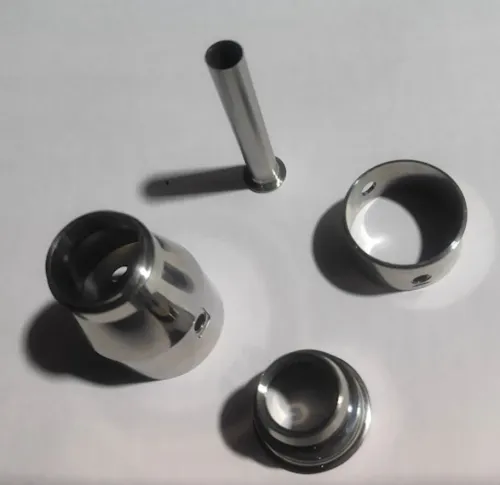
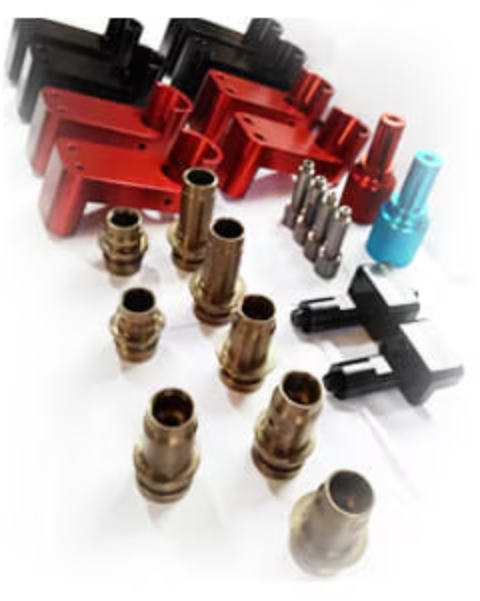
Modern manufacturing systems depend on components that may appear small but perform highly critical functions. Industrial Precision Micron Components are commonly required where dimensional relationships, fits, alignment, movement, sensing, or repeatable assembly need a level of control beyond ordinary machining.
Their importance is not determined by physical size. A small pin, bush, insert, spacer, shaft, block, or custom-machined feature can influence the accuracy of an entire machine or assembly.
Precision components support controlled movement
Automation equipment often contains sliding, rotating, locating, and indexing mechanisms. These systems depend on controlled clearances between mating components.
If the clearance is too large, unwanted play may develop. If it is too small, friction, seizure, or premature wear can occur.
Precision manufacturing helps establish dimensional relationships that allow assemblies to function as intended.
Tooling applications depend on reliable references
Jigs, fixtures, gauges, press tools, welding systems, and assembly equipment often contain accurately machined elements that establish reference positions.
Typical applications can include:
- Locating pins
- Precision bushes
- Guide elements
- Custom shafts
- Tooling inserts
- Inspection components
- Fixture blocks
- Machine elements
- Automation mechanism parts
- Specialized assembly components
The tolerance required depends on the function. Applying extremely tight tolerances to every feature can unnecessarily increase manufacturing cost, while insufficient control on a functional feature can compromise performance.
Material selection matters as much as tolerance
A precision dimension alone does not determine component suitability. Material properties must match the operating environment.
Components exposed to repeated sliding may require wear resistance. Tooling elements may need hardness and dimensional stability. Other applications may prioritize corrosion resistance, toughness, low weight, or machinability.
Heat treatment and finishing processes can also affect final dimensions. These processes need to be considered in the manufacturing sequence when tight tolerances must be maintained.
Inspection needs to be practical
Micron-level requirements demand an appropriate measurement strategy. Production engineers should identify which dimensions are functionally critical and determine how those dimensions will be verified.
This prevents a common manufacturing problem where a tolerance is specified on a drawing but cannot be measured efficiently using the planned inspection setup.
Pune and Maharashtra have a broad industrial ecosystem covering automotive manufacturing, machine building, aerospace supply, defence engineering, industrial automation, and specialized tooling. This creates applications where precision components may be required for both production equipment and finished assemblies.
Functional precision matters more than impressive numbers
A tighter tolerance is not automatically a better tolerance. Precision should be driven by the functional requirement of the assembly.
Designers and production engineers benefit from examining mating relationships, expected loads, wear, assembly method, operating temperature, and maintenance requirements before finalizing specifications.
Manufacturing Industrial Precision Micron Components successfully therefore requires collaboration between design, production, quality, and tooling teams.
When functional requirements are understood early, manufacturers can choose suitable materials, machining processes, inspection methods, and tolerance strategies. The result is not simply a component that measures correctly on an inspection report, but one that performs reliably within the larger industrial system.
Keywords