Industrial automation is most effective when it solves a clearly defined production problem. Adding sensors, actuators, robots, controls, and automated mechanisms without understanding the existing process can create complexity rather than improvement. This makes the engineering approach of an Automation Tools Manufacturer an important consideration during provider selection.
Before discussing hardware, a capable automation project should begin by understanding what the production team needs to improve.
The current process needs to be measured first
Automation projects often target cycle time, repetitive manual work, inconsistent positioning, inspection, handling, assembly, or operator safety.
However, a vague objective such as 'automate this station' provides limited engineering direction.
Production teams should document:
- Current cycle time
- Manual operations
- Component variants
- Quality issues
- Production volume
- Available floor space
- Operator interaction
- Upstream and downstream processes
- Required inspection points
This establishes a measurable baseline for the project.
Mechanical tooling is part of automation
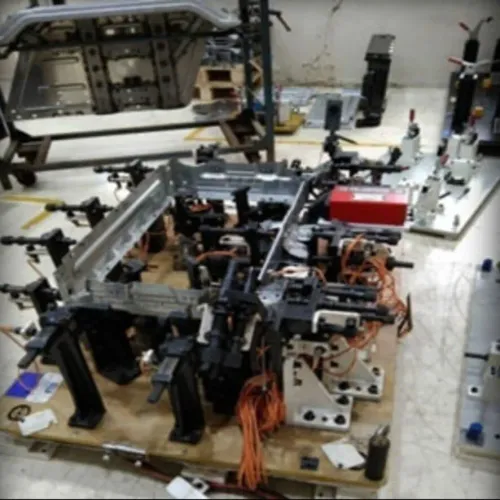
Automation is not only a controls project. Fixtures, grippers, nests, locating mechanisms, slides, transfer systems, machine components, and guarding can be equally important.
If a robotic system receives inconsistently positioned components, programming alone may not create a stable process.
For this reason, mechanical design, precision tooling, sensing, and controls need to work as a coordinated system.
Production teams should discuss failure conditions
A useful design review considers what happens when something does not go according to plan.
What happens if a component is missing? Can the system detect incorrect loading? How does the station respond when a sensor fails? Can maintenance personnel access critical components safely and efficiently?
Thinking about abnormal conditions during development can improve practical production readiness.
Flexibility should reflect actual needs
Manufacturers handling multiple component variants may require adjustable tooling, recipe-based controls, quick-change fixtures, or modular automation.
However, unnecessary flexibility can increase complexity and investment. The automation concept should reflect realistic product variation rather than every hypothetical future requirement.
Pune has a substantial base of automotive OEMs, Tier 1 and Tier 2 suppliers, machine builders, fabrication businesses, and industrial engineering companies. Automation projects in this environment often need to integrate with existing equipment rather than being developed as isolated standalone systems.
Evaluate commissioning and maintainability
Before selecting an Automation Tools Manufacturer, buyers should understand how the system will be tested and validated.
Questions should cover cycle performance, component trials, safety checks, operator training, maintenance access, spare components, technical documentation, and support during commissioning.
Excellent Tools combines precision engineering, tooling, fixtures, and industrial automation capabilities for manufacturing requirements in Pune.
A well-prepared automation provider should be able to connect the production problem with a practical engineering solution and explain how the system will function during normal operation, changeovers, maintenance, and foreseeable fault conditions.
The strongest readiness indicator is not the number of automated features proposed. It is whether each feature contributes to measurable production performance while keeping the system reliable, maintainable, and practical for the people who will operate it every day.
Keywords