In precision manufacturing, producing one accurate component is only part of the challenge. The bigger test is producing hundreds or thousands of components while maintaining the same dimensional accuracy, positioning, and quality. This is where Jigs and fixtures become an important part of a stable production process.
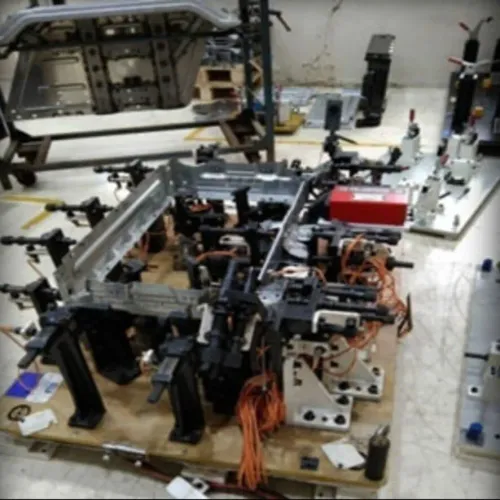
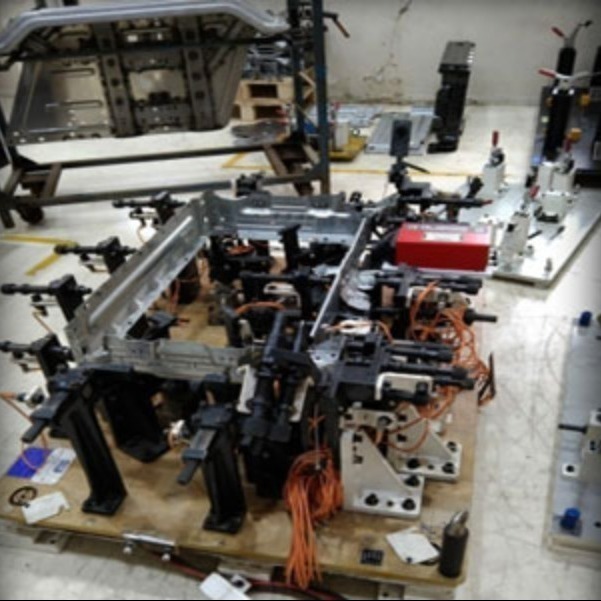
A jig primarily helps guide a cutting or machining tool, while a fixture securely locates and holds a workpiece during manufacturing. Both are designed around a fundamental objective: reducing unnecessary variation between production cycles.
For automotive, aerospace, defence, and general engineering manufacturers, small positioning errors can affect hole locations, mating surfaces, weld geometry, assembly alignment, and final inspection results. A properly engineered workholding system establishes repeatable reference points so operators do not need to manually locate every component from the beginning.
Why repeatability depends on proper workholding
A component may be manufactured on a highly accurate CNC machine, but inconsistent loading can still create variation. Reliable fixtures control how the workpiece sits, where it is supported, and how clamping force is applied.
An effective fixture generally considers:
- Component datum and locating strategy
- Clamping accessibility
- Machining and welding forces
- Loading and unloading time
- Operator ergonomics
- Tool clearance
- Inspection accessibility
- Chip and coolant evacuation where applicable
The objective is not simply to hold the component tightly. Excessive or poorly distributed clamping force can deform thin sections and create dimensional problems after unclamping.
Production volume changes fixture requirements
A prototype fixture and a high-volume production fixture rarely need the same design approach. Low-volume manufacturing may benefit from flexibility and adjustability, while repetitive production usually places greater emphasis on cycle time, foolproof loading, durability, and consistent locating.
For manufacturers in Pune and across Maharashtra, this distinction is particularly relevant because the regional engineering ecosystem includes automotive component manufacturers, machine builders, fabrication companies, Tier 1 suppliers, and precision machining businesses handling very different production volumes.
Before developing a fixture, production engineers should therefore establish the expected quantity, machine environment, tolerance requirements, operator interaction, and inspection method.
Good fixture design also supports quality control
Inspection problems are sometimes treated separately from production problems, even though the two are closely connected. If a part cannot be located consistently during manufacturing, maintaining reliable inspection results becomes harder.
Well-planned workholding can improve process stability by creating consistent references throughout machining, welding, assembly, and checking operations.
A fixture should also be evaluated over its complete service life. Locators, bushes, clamps, and contact surfaces can wear after repeated use. Designs that allow critical wear components to be inspected and replaced can simplify long-term maintenance.
Excellent Tools works with industrial manufacturers in Pune requiring application-specific tooling and precision engineering support. For production teams evaluating a new fixture, the most useful starting point is not the fixture itself but the complete manufacturing process.
Understanding the component, tolerance, machine, cycle time, loading method, and expected production quantity helps engineers develop Jigs and fixtures that support repeatable manufacturing rather than simply holding a part in position.
Keywords